
Published Lotus Project Resources & Research Manuscripts
Resource Guide for Adopting & Tailoring Evidence-Based Practices & Community-Based Practices for Asian American & Asian Immigrants
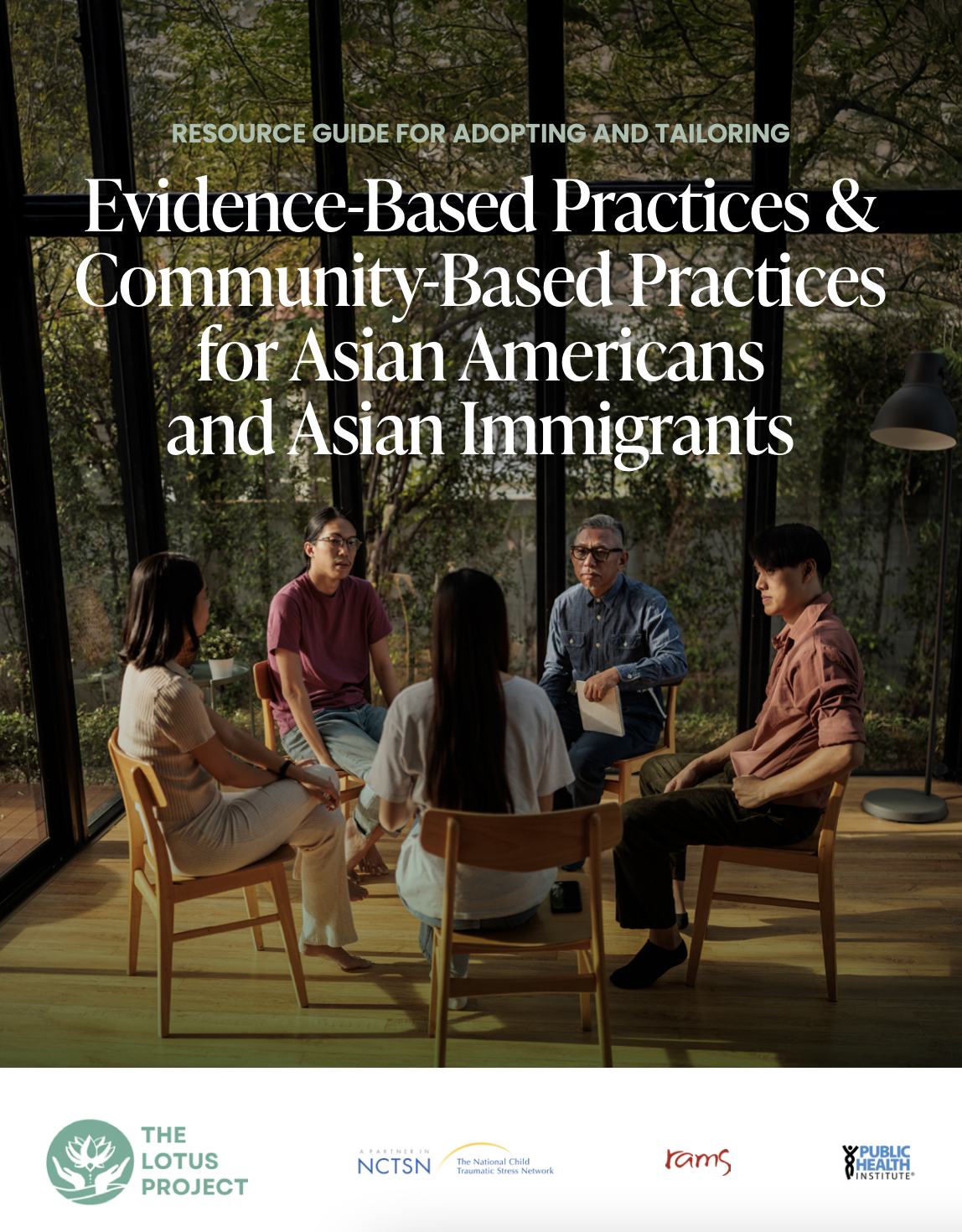
Evidence-based practices (EBPs) are widely recognized as foundational for effective mental health care, yet many were developed without adequately considering the cultural, linguistic, and contextual needs of Asian American and Asian Immigrant (AAAI) communities. In response, mental health professionals and community-based organizations (CBOs) often adapt EBPs and integrate community-based practices (CBPs) rooted in cultural traditions, lived experiences, and community knowledge to better support AAAI populations.
To better understand how EBPs and CBPs are used in practice, we conducted interviews with 39 experienced mental health professionals and CBO staff across California serving AAAI communities. This resource guide highlights commonly used EBPs, culturally responsive adaptations, widely used CBPs, and practical considerations for implementation and evaluation. The guide also includes recommendations for integrating these approaches to support healing, well-being, and equitable mental health care for AAAI communities.
Who will benefit from this guide
This guide is intended for mental health providers, educators, community workers, service providers, and others working with AAAI populations. Readers will gain practical strategies for implementing culturally responsive EBPs and CBPs across settings such as community-based organizations, schools, and healthcare facilities.
Journal Article: Adapting evidence-based practices for AAAI communities: insights from community-based organizations and therapists
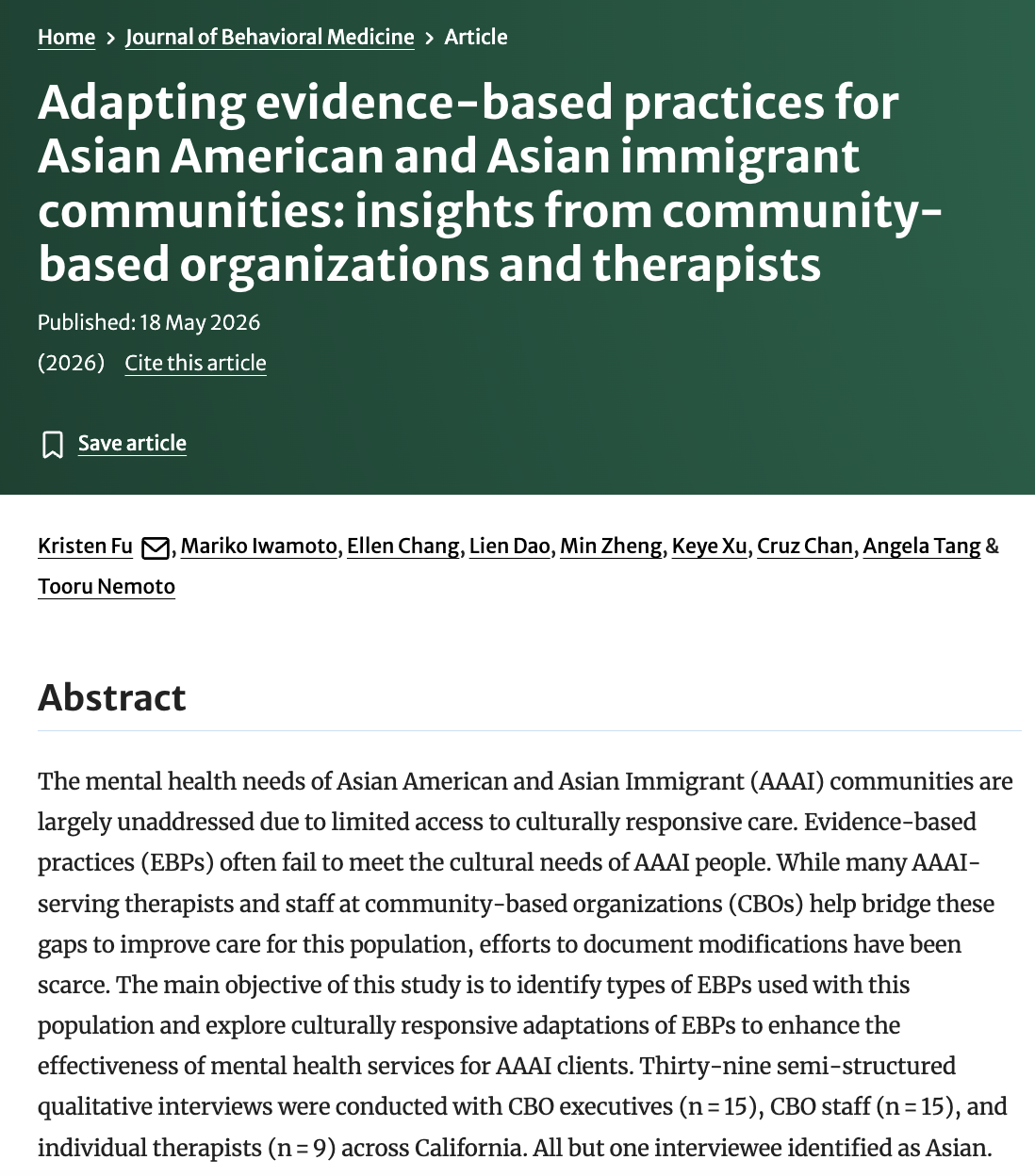
This research manuscript explores how therapists and community-based organizations adapt evidence-based practices (EBPs) to provide more culturally responsive, trauma-informed care for Asian American and Asian Immigrant (AAAI) communities. Drawing from interviews with 39 mental health professionals and CBO staff across California, the study highlights key adaptation strategies, including language accessibility, relationship building, cultural humility, flexibility in care, and community collaboration, as well as broader implementation factors that shape the effectiveness and accessibility of mental health services for AAAI populations.
Fact Sheet: Talking to Youth about Anti-Asian American and Pacific Islander Hate
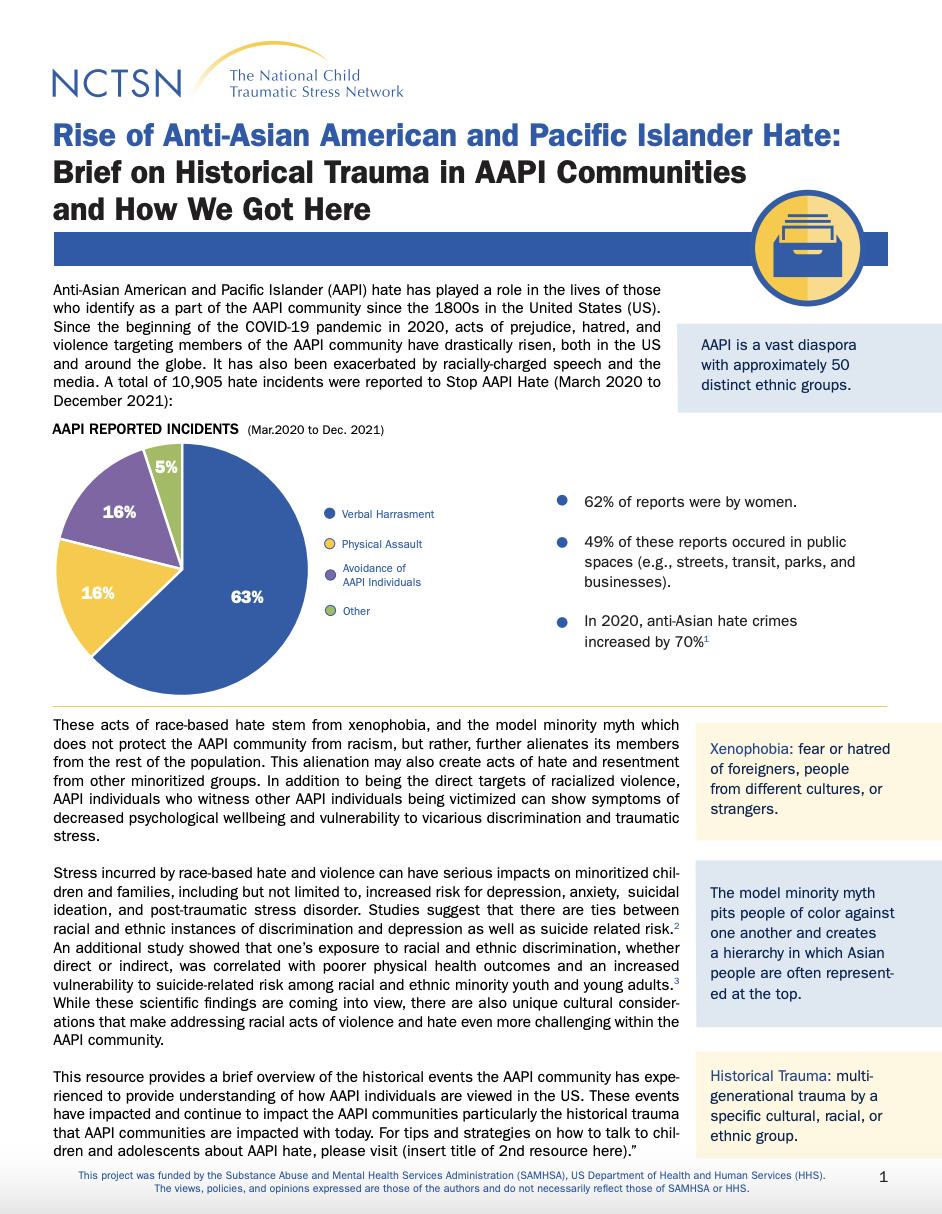
In collaboration with NCTSN, the Lotus Project created this resource which provides an understanding of why it is important to talk to children about hate-based violence against AAPI communities, how to recognize signs of traumatic stress and its impact, how to begin a conversation with youth about anti-AAPI hate, and what can be done in response.
Fact Sheet: Rise of Anti-Asian American and Pacific Islander Hate: Brief on Historical Trauma in AAPI Communities and How We Got Here
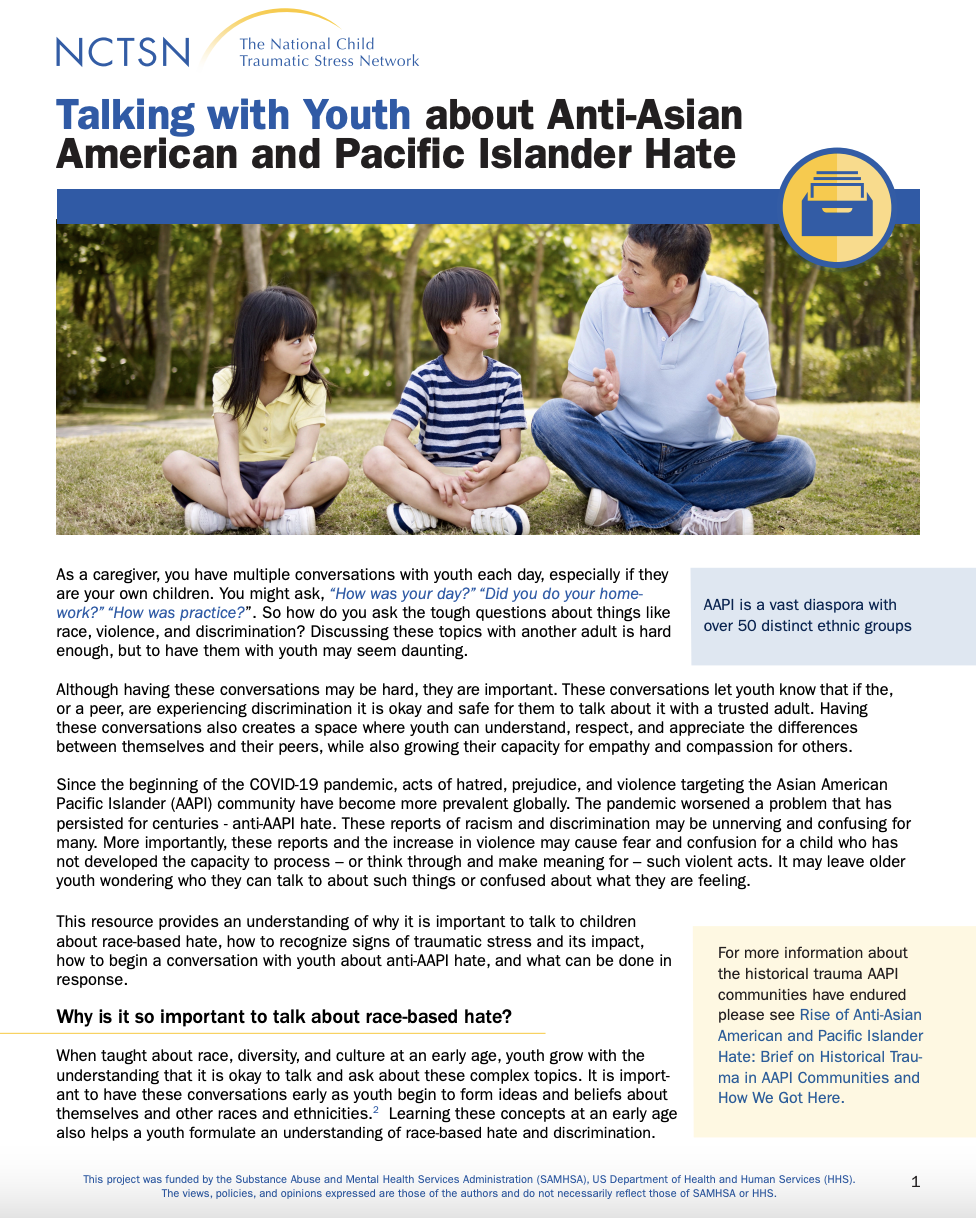
In collaboration with NCTSN, the Lotus Project created this resource which provides information pertaining to the history of anti-Asian American and Pacific Islander (AAPI) hate. This resource explores the historical trauma caused by these events, leading up to the rise of anti-AAPI hate statistics that increased at the beginning of COVID-19.